Showing posts with label Leadership. Show all posts

Tuesday, October 6, 2015

The Pulley

The other day I was stopped at a “T” intersection waiting on an approaching car to pass by before I could proceed. There was also a gray squirrel crouching in the middle of the road. The squirrel suddenly realized that the car I was waiting on was bearing down on him. He ran left, then right, then left, and then right – and to my utter amazement, the car passed right over him --allowing him to escape unscathed. It‘s worth noting that the car never deviated. Whether the driver was oblivious to the squirrel or just staying true to his course, I don’t know.  

The US Army has a course that’s specifically designed to facilitate the type of deliberate decision making that the squirrel so successfully employed. This course doesn’t consist of classes and lectures. It’s known as the Leader’s Reaction Course (LRC). In many ways it resembles the typical Army obstacle course, but serves a different purpose.

The Army has two types of obstacle courses: The Conditioning Obstacle Course “develops physical capacities, fundamental skills, and abilities that are important to Soldiers in combat operations. It has low obstacles that must be negotiated quickly.” The Confidence Obstacle Course “has higher and more difficult obstacles than the conditioning course. It gives Soldiers confidence in their mental and physical abilities and cultivates their spirit and daring. Confidence obstacle courses incorporate complex obstacles that involve height and are not run for time.”

Although the LRC may physically resemble the two aforementioned, it is designed to more fully exercise the analytical and leadership faculties. The concept for the Leader’s Reaction Course reportedly began with German psychologists during the late 1920s. They were interested in the selection process of prospective officers. Their selection process included, “tests for imagination and rapid learning ability; capacity for swift adjustment; emotional stability and security of conduct. They found that a series of leader situations provided an opportunity to observe the presence of the desirable leader skills.”

After WWII, the British adapted the German leader evaluation concept, including the LRC. An LRC was eventually established by the US Air Force at Maxwell Air Force Base, Alabama. “It was used there as one of the four means to evaluate students of the Squadron Officers Course.” In September 1953, the Infantry School at Fort Benning built an LRC for West Point cadets who were coming to attend a summer training program in 1954.

The Army’s intent behind the LRC is to improve the student’s leadership ability; assess the student’s leadership traits and behaviors; provide the student with a means of making a self-evaluation of his leadership abilities; and provide students the opportunity to observe the strengths and weaknesses of others during a team operation.

Many years ago, while at Fort Bragg, NC I was in a position to watch numerous teams negotiate a particular LRC obstacle. That obstacle had some walls and poles that had to be climbed as well as some ditches that had to be forded. The equipment provided at that obstacle included some boards, some fuel drums, about 75 feet of large diameter rope and a very large pulley with a hook on the top.

Obviously the leadership dynamics of each team were different. In some instances one guy took charge and was very directive in nature, obviously efficient but the pitfalls to that approach are also numerous. In some cases there was a more deliberative, democratic, committee like methodology. Others broke down into teams and tried to gain efficiencies in their simultaneity. While that was all very interesting, that is not what amazed me about that particular obstacle.

What fascinated me the most that day was not the various leadership approaches or divisions of labor. What captivated me was how each and every team earnestly tried to figure out how to employ the rope and pulley. Without fail, for at least fifteen minutes, they all struggled with that pulley. They tried to hook it to things, tried routing the rope through the sheave, etc., etc. -- all to no avail. In fact, the pulley served no useful purpose whatsoever – it was in actuality, a hindrance.
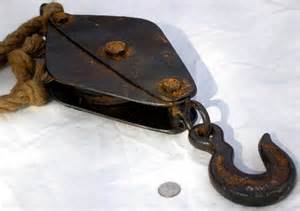

How many times have I, like the squirrel dashed about going nowhere or vainly tried to figure out how to employ the “pulley”? Perhaps the better reaction -- as prescribed by the greatest Leader: “Seek ye first the kingdom of God, and his righteousness; and all these things shall be added unto you.”

Lord, help us to lead by following You.


This column appears in The Upson Beacon, 7 OCT 2015 published in Upson County, GA.

Tuesday, September 22, 2015

Peacemakers and Peace Prizes


Let me start by confessing President Obama’s leadership approach makes me ill.  It’s my judgment that his “leadership” has made our nation and the entire world a more dangerous and unstable place.  His racism, partisanship and class-envy agenda has stoked the fires of dissension, rebellion and anarchy.  These wild fires are now out-of-control and might well be beyond the ability of man or government to contain. 

Doing a little introspection (like checking for lumps), I realized my mindset has gone well beyond the mere fact that I believe Obama and his cronies are destroying our country and destabilizing the world-order for future generations – it has become a medical disorder.  Recalling the syndrome that plagued so many liberals when Bush and Cheney were in office, I began a little internet medical research to see if I was suffering from something comparable. 

Using the search term “Bush Derangement Syndrome”, I quickly learned that BDS was discovered by my second favorite Jew, Dr. Charles Krauthammer (Jesus of Nazareth being my favorite).  The definition of BDS according to the good doctor:  “the acute onset of paranoia in otherwise normal people in reaction to the policies, the presidency -- nay -- the very existence of George W. Bush.”  Those most at risk for the dreaded BDS -- Doctor Krauthammer said that it, “generally struck people with previously compromised intellectual immune systems.”
   
Through the power of the internet (and Al Gore’s ingenuity), I was able to uncover my malady – Obama Derangement Syndrome ODS.  There is great comfort in knowing one’s disability has a name.  In a clear-cut case of copy-cat medicine, Dr. Christopher Zimmermann has gone so far as to develop six-stages for the disease. (I’m a four on my good days.)  Here’s an abbreviated list of symptoms:  

Stage One.  Subtle, low level criticisms of Obama's "leadership" abilities.  

Stage Two.  Attacks on the President begin to take on a nonsensical element such as criticism of Obama playing golf, taking a vacation with his family, or eating mustard on his hamburger.  (Zimmerman makes no allowance for golf outings immediately after announcing American beheadings.)

Stage Three.  Unable to call the President by his name, using incendiary monikers such as Barry, Obummer, Zero, etc.
Stage Four.  Use of phrases like, "Anyone but Obama."  The diseased begin to take any position, so long as it is not Obama's position.  Mocking ideas like "hope" and "change" as naive, simply because Obama embodies them.

Stage Five.   Assaults on the President's character begin to imply he is evil at his core. The development of conspiracies that suggest Obama is knowingly executing an agenda that will harm America are commonplace. Questions like, "Is Obama A Bigger Threat Than Al Qaeda?" and "Obama: A Radical Leftist Who Seeks To Dismantle Capitalism?" are common place.

Stage Six.  People who are offended by Barack Obama's very existence.  

Now where were we?  Oh yea, discussing leadership. 

Like it or not, a superpower cannot abdicate its responsibility to lead, anymore than the father of a family can without bad things happening.  The mantle of global leadership, like paternal leadership, is incumbent with the position.  The oxymoronic (maybe just moronic) “leading from behind” is not leadership – it is dereliction of duty.   One only need look to our inner cities to see the consequences of absentee fathers.   Observe the Middle East to see what dereliction and our “Peace through withdrawal” strategy has wrought.  President Obama’s Nobel Peace prize, awarded in anticipation of the peace to come, may well have to be revoked for the mayhem ultimately delivered.
 
Paradoxically, there is another man, a man considered by many to be a man of war, who is credited with bringing about peace.  For the last couple of weeks I’ve been reading a biography about said peacemaker, General David Petraeus.  I was extremely impressed by his thoughts on strategic leadership.

Petraeus said there are four tasks he thinks strategic leaders have to perform:
- First, “Get the ‘Big Ideas’ right.”
- Second, “Effectively communicate the Big Ideas.”
- Third, “Oversee the implementation of the Big Ideas.”
- Fourth, “Capture best practices and lessons…to help refine the Big Ideas.”

After reading that I earnestly, honestly, and objectively tried to identify what Obama’s “Big Ideas” are – what is it he believes in?  Closing GTMO, the Iran deal, climate change, sexual rights (a new government term), Making America Great Again (just kidding).   It would be funny if it wasn’t so serious.

What is the “big idea” of the Obama administration – honestly, I have no idea.  


This column appears in The Upson Beacon, 23 SEP 2015 published in Upson County, GA.